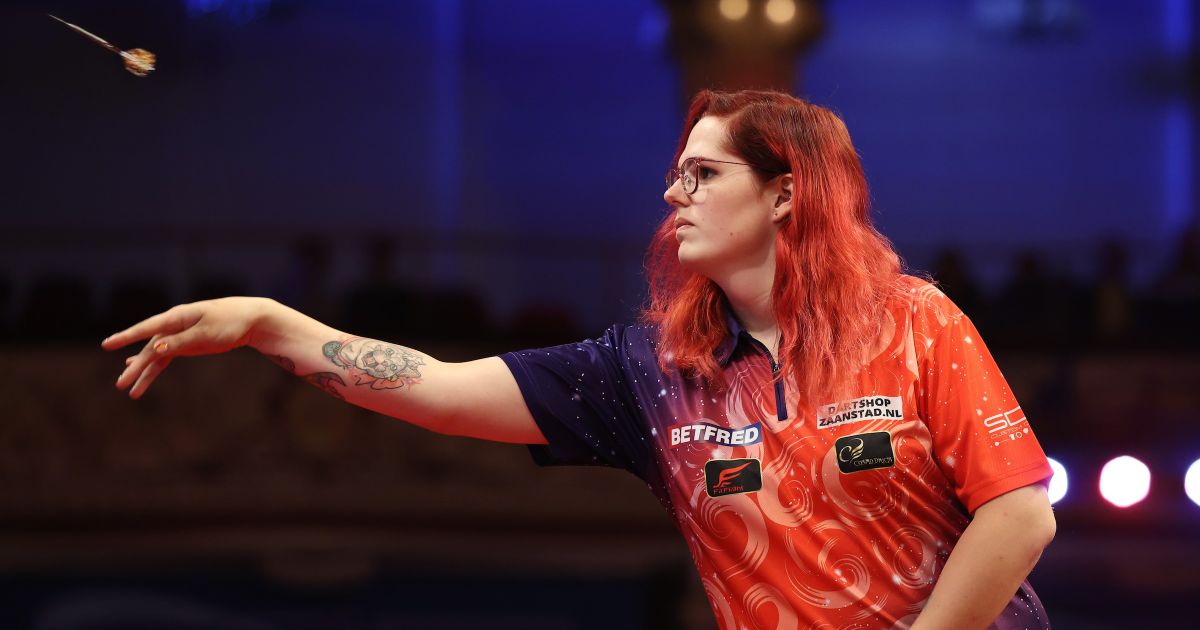
Noa-Lynn van Leuven's Darts Retirement: Impact of New Transgender Rules
The world of professional darts is currently grappling with a significant shift in its regulatory landscape, directly impacting transgender athletes. At the heart of this controversy is Noa-Lynn van Leuven, a Dutch darts player whose promising career in women's tournaments has been abruptly cut short by new guidelines. This decision, spearheaded by the Darts Regulation Authority (DRA) and adopted by the Professional Darts Corporation (PDC), has forced van Leuven into an early "retirement" from the women's circuit, a move she describes as involuntary.
Her story resonates far beyond the oche, highlighting the complex and often contentious debate surrounding the participation of transgender women in sports. Van Leuven's experience is not isolated; it reflects a growing trend of policy changes across various sporting bodies, raising profound questions about fairness, inclusion, and the future of athletic competition for trans individuals. This article delves into the specifics of these new regulations, explores Noa-Lynn van Leuven's personal journey and its abrupt end, and examines the broader implications for the transgender community in sports.
The New Darts Regulations: A Sudden Shift
On a pivotal Thursday, the Darts Regulation Authority (DRA), the overarching body governing darts, unveiled a new directive that sent ripples through the sport. This policy, immediately adopted by the Professional Darts Corporation (PDC), explicitly states that transgender women, including accomplished players like Noa-Lynn van Leuven, are no longer permitted to compete in women-only tournaments. Van Leuven, in a heartfelt video shared on Instagram, starkly summarized the immediate consequence: "Damit bin ich praktisch raus" – "With that, I am practically out."
These new PDC Darts Rule: Trans Women Excluded from Female Tournaments mark a significant departure from previous inclusivity practices within the sport. While the DRA underscored its commitment to overall inclusivity and encouraged participation in mixed tournaments, the impact on dedicated women's categories is undeniable. For trans women, this means a categorical exclusion from what they have trained for and competed in. The PDC, renowned for organizing prestigious events like the World Championship at London's Alexandra Palace, confirmed that while trans women can still participate in open tournaments (those not specifically designated for women only), the women's specific pathway is now closed off. This distinction is crucial, as many trans athletes find their competitive space and community within the women's categories, which often serve as vital stepping stones in their professional careers. The implementation of these PDC Transfrauen Regeln (PDC transgender women's rules) has undoubtedly created a new paradigm for athlete eligibility in darts, prompting a closer look at its ramifications.
Noa-Lynn van Leuven's Heartfelt "Retirement"
Noa-Lynn van Leuven's journey in darts has been one of dedication and breaking barriers. In 2022, she completed her hormone therapy, and in December 2024, she made history as the first openly transgender woman to compete in the Darts World Championship. Her participation was a beacon of hope and representation for the transgender community, showcasing talent and determination on a global stage. However, the recent DRA directive has cast a long shadow over her achievements and aspirations.
In her poignant Instagram video, van Leuven articulated a sense of profound injustice and heartbreak. "I have worked so incredibly hard for years to get to this point. And now, with just one decision, I am told that I no longer belong," the 29-year-old expressed. This was not a retirement she chose; rather, it was a forced withdrawal from the competitive category where she had invested so much. Her words highlighted the immense personal sacrifice and effort required to compete at an elite level, only to have that path suddenly closed off. The emotional toll of such a decision is immense, affecting not just her professional career but also her identity as an athlete and her sense of belonging within the sport she loves. For many, Noa-Lynn's story is a stark reminder of the personal cost when policies shift dramatically, particularly for those who have already overcome significant hurdles to participate.
Broader Implications: A Blow to the Trans Community in Sports
Noa-Lynn van Leuven rightly pointed out that the new darts regulations extend beyond her individual experience. "This is the next heavy blow for the trans community, especially after the recent decisions made by the IOC," she emphasized. Her statement connects the dots between the darts ruling and a larger, evolving landscape of policies affecting transgender athletes globally.
The International Olympic Committee (IOC) has indeed moved towards stricter guidelines, advocating for mandatory gender testing for all female athletes and signaling an intent to restrict transgender women from competing in women's categories. This approach prioritizes what some see as competitive fairness, based on perceived biological advantages, over the principle of full inclusion for transgender individuals. This shift is deeply concerning for the trans community, as it compounds the challenges faced by trans people not just in sports, but in simply existing and being recognized. The repeated narrative of exclusion, whether in sports or other societal spheres, reinforces a sense of marginalization and questions the very right of trans individuals to participate fully in public life.
The debate often centers on complex biological factors, such as bone density, muscle mass, and hormonal differences. While sports bodies grapple with finding a balance, the immediate human impact on athletes like Noa-Lynn is undeniable. These decisions can lead to profound psychological distress, loss of opportunity, and a feeling of being unwelcome in spaces that should, ideally, foster camaraderie and personal growth. The call from many trans advocates, including van Leuven, is simple: "We just want to be." This sentiment underscores a fundamental desire for acceptance and the ability to pursue passions without discriminatory barriers, an ideal that seems increasingly distant in the current sports climate.
Navigating the Future: What's Next for Transgender Athletes and Sports Bodies?
The path forward for transgender athletes and the sports organizations governing them is fraught with challenges and difficult conversations. The recent PDC Transfrauen Regeln, alongside similar decisions by the IOC and other federations, necessitate a comprehensive re-evaluation of how sports can be both fair and inclusive.
Understanding the Complex Perspectives:
- For Sports Bodies: The primary driver behind these restrictive policies is often the perceived need to ensure competitive integrity within women's sports. Concerns about potential biological advantages of trans women, even after hormone therapy, are frequently cited. However, the science on this is still evolving and complex, with varying opinions on the extent and persistence of such advantages across different sports.
- For Trans Athletes: These decisions can be devastating. They represent not just the loss of competitive opportunities but also a profound invalidation of their identity and hard work. Many trans athletes have dedicated their lives to their sport, only to find the goalposts moved against them. The mental health implications, including increased feelings of isolation and discrimination, are significant.
Practical Tips and Actionable Advice:
- For Athletes:
- Explore Open Categories: While not a substitute for women's categories, participation in open or mixed-gender tournaments may remain an option, allowing athletes to continue competing.
- Advocacy and Community Building: Connect with trans sports organizations and advocacy groups. Collective voices are powerful in pushing for more nuanced and inclusive policies.
- Prioritize Well-being: The emotional toll can be immense. Seeking support from mental health professionals, allies, and community networks is crucial.
- For Sports Bodies:
- Evidence-Based Policies: Decisions should be grounded in robust, sport-specific scientific research, not just generalized assumptions or public pressure. Regular reviews and adaptability are key.
- Nuanced Categorization: Could there be alternative categories or pathways that balance inclusion with fairness concerns, such as universal categories, or specific categories based on physiological markers rather than birth sex alone?
- Dialogue and Consultation: Engage directly with transgender athletes, medical experts, and human rights organizations to develop policies that are both equitable and humane.
- For Fans and the Public:
- Stay Informed: Understand the complexities of the debate from multiple perspectives. Avoid generalizations and engage with empathy.
- Support Inclusive Initiatives: Look for and support local or grassroots sports organizations that are actively working to create truly inclusive environments for all athletes.
The future likely involves continued debate and a search for innovative solutions. Sports like darts have a unique opportunity to lead by example, fostering environments where all individuals feel valued. For more insights into how this global trend affects various sports, you might be interested in reading Darts Joins IOC: New Rules & the Future for Trans Women in Sports.
Conclusion
Noa-Lynn van Leuven's "retirement" from women's darts tournaments marks a significant and regrettable moment in sports history, echoing a broader, intensifying global debate. The new PDC Transfrauen Regeln, while framed by some as an effort to ensure fairness, have effectively shut down a competitive pathway for transgender women, profoundly impacting athletes like van Leuven who have dedicated their lives to the sport. Her story serves as a poignant reminder of the personal cost when policy decisions prioritize one aspect of fairness over another, leading to exclusion and marginalization.
As sports organizations worldwide grapple with the complex intersection of inclusion, competitive integrity, and biological differences, the call for nuanced, compassionate, and evidence-based solutions becomes ever more urgent. The goal should be to create sporting environments where everyone, including transgender individuals, can experience the joy and benefits of competition without facing arbitrary barriers. The conversation continues, and the hope remains that a truly equitable and inclusive future for all athletes can still be forged.