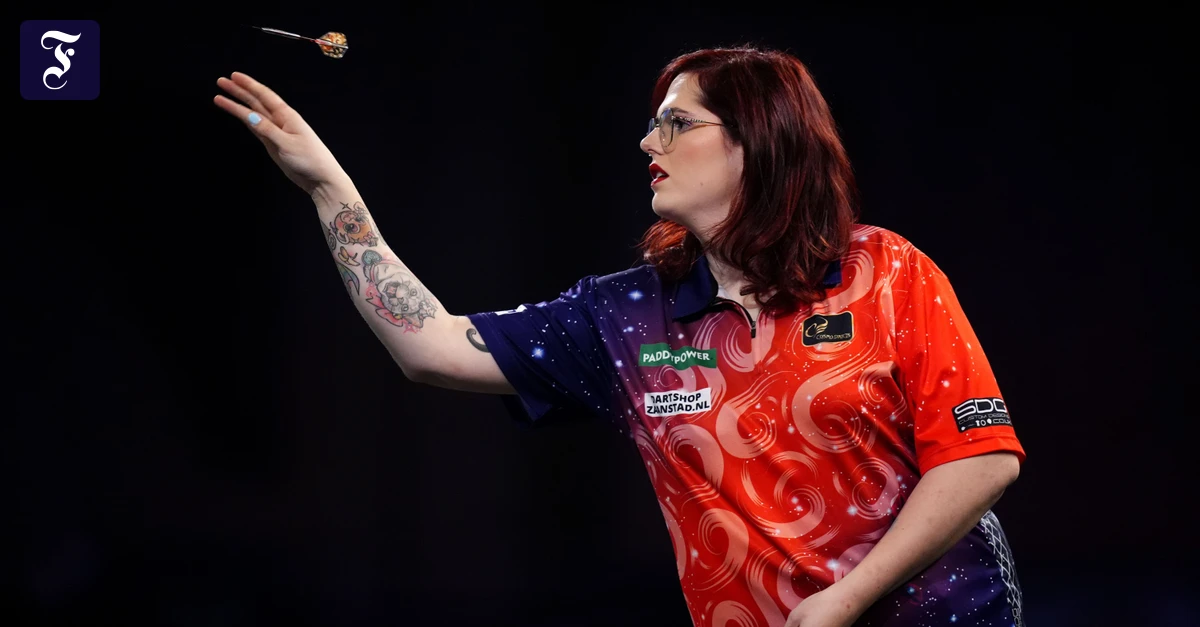
PDC Darts Rule: Trans Women Excluded from Female Tournaments
In a significant move that has sent ripples through the professional darts community and the wider sporting world, the Professional Darts Corporation (PDC) has adopted a new policy that will exclude trans women from competing in female-only tournaments. This decision, driven by new guidelines from the Darts Regulation Authority (DRA), marks a pivotal moment for transgender athletes in a sport often perceived as less physically demanding than others. The ramifications are immediate and profound, particularly for players like the Netherlands' Noa-Lynn van Leuven, who has openly expressed her deep disappointment and sense of involuntary retirement from women's competitions. The new pdc transfrauen regeln are set to reshape the landscape of competitive darts, sparking intense debate about fairness, inclusion, and the future of transgender participation in sports.
The New PDC Darts Rules: A Paradigm Shift for Transgender Athletes
The Darts Regulation Authority (DRA), the overarching regulatory body for professional darts, recently published a comprehensive directive outlining new eligibility criteria for female tournaments. This directive, swiftly adopted by the PDC, unequivocally states that trans women, despite undergoing hormone therapy, will no longer be permitted to participate in competitions designated exclusively for female players. This policy aligns darts with a growing trend among international sports federations to reassess and often restrict the involvement of trans women in women's categories.
For players like Noa-Lynn van Leuven, who has been a visible and successful trans woman in the sport, the implications are stark. "Damit bin ich praktisch raus" – "With that, I am practically out," she stated in an emotional Instagram video following the announcement. This new interpretation of the pdc transfrauen regeln effectively closes off a crucial avenue for competition and professional development for trans women in darts. While the DRA emphasized its commitment to inclusivity by encouraging all players to participate in mixed tournaments, the exclusion from female-only events is a distinct and impactful barrier.
It's important to clarify the scope of these rules. Trans women will still be eligible to compete in open tournaments, which are accessible to both men and women. The PDC World Championship, held annually at the iconic Alexandra Palace in London, falls into this category. Van Leuven herself has competed twice in the World Championship, demonstrating her skill on the biggest stage. However, the loss of access to the female-only circuit means a significant reduction in competitive opportunities, prize money, and pathways to professional advancement for trans women who previously aimed for success within those categories.
Noa-Lynn van Leuven's Heartfelt Reaction and the Personal Toll
The immediate and most poignant impact of these new rules has been felt by Noa-Lynn van Leuven. A trailblazer in the sport, van Leuven notably became the first trans woman to compete at the Darts World Championship, marking a significant milestone in inclusivity. Her journey to the professional darts circuit has been one of dedication and hard work, culminating in her participation in high-profile events.
In her Instagram video, van Leuven expressed a profound sense of injustice and disappointment, describing her situation as a "retirement I did not choose." Her words resonated deeply: "I have worked so incredibly hard for years to get to this point. And now, with just one decision, I am told that I no longer belong." This sentiment highlights the immense personal investment athletes make in their careers and the devastating emotional toll when those paths are abruptly curtailed by policy changes. At 29 years old, van Leuven's competitive career in women's darts, which saw her complete hormone therapy in 2022, has been cut short, leaving her feeling excluded and marginalized.
Van Leuven also emphasized that the decision's impact extends far beyond her individual experience. "This is the next heavy blow for the trans community, especially after the recent decisions made by the IOC," she asserted. Her statement underscores a broader concern within the transgender community about a perceived regression in the pursuit of inclusion and equitable participation in sports worldwide. For a more detailed look at her reaction and the immediate consequences, read our article: Noa-Lynn van Leuven's Darts Retirement: Impact of New Transgender Rules.
Broader Implications: Darts Joins a Growing Trend in Sports Governance
The PDC's adoption of the DRA's guidelines is not an isolated incident but rather a reflection of a wider trend sweeping across international sports. As Noa-Lynn van Leuven pointed out, this decision follows closely on the heels of new directives from the International Olympic Committee (IOC). The IOC, a leading voice in global sports governance, has recently decided that all female athletes will be subject to gender testing for participation in international women's competitions, and more critically, it has recommended that trans women should generally be barred from competing in the female category. These moves signal a significant shift from previous, more inclusive guidelines.
The rationale behind such policies, often articulated by sporting bodies, centers on the concept of competitive fairness. Proponents argue that biological advantages retained by individuals assigned male at birth, even after hormone therapy, could compromise the integrity of women's sports. They contend that women's categories were established to provide a level playing field for biological females, and that allowing trans women to compete would undermine this fundamental principle. However, critics argue that such blanket bans are discriminatory, fail to account for the diversity of individual physiological responses to hormone therapy, and stigmatize transgender individuals.
Darts, while not a contact sport, still requires immense precision, mental fortitude, and fine motor skills. The debate over whether biological advantages play a decisive role in a game like darts, compared to, say, track and field or weightlifting, adds another layer of complexity. Regardless of the sport's specific demands, the general consensus forming among many sports governing bodies appears to prioritize a strict definition of biological sex for female categories. This creates a difficult tightrope walk between ensuring fairness for cisgender women and upholding the rights and inclusion of transgender athletes. For a deeper dive into how this decision aligns with broader global trends, check out: Darts Joins IOC: New Rules & the Future for Trans Women in Sports.
The Ongoing Debate: Navigating Fairness and Inclusion
The exclusion of trans women from female-only competitions ignites a fervent debate that pits two fundamental sporting values against each other: fairness and inclusion. For many, fairness in women's sports means ensuring that biological advantages derived from male puberty do not disproportionately affect competitive outcomes. They highlight that puberty in males leads to greater bone density, muscle mass, and lung capacity, which are not entirely reversed by hormone therapy. From this perspective, separate categories based on sex assigned at birth are seen as essential for protecting the opportunities and achievements of cisgender women.
Conversely, advocates for transgender inclusion argue that sport should be for everyone, and that excluding trans women is a form of discrimination. They emphasize that transgender people are individuals whose gender identity does not align with the sex they were assigned at birth. Many trans women undergo extensive medical transition, including hormone therapy, which significantly alters their physiology. Their plea, as echoed by Noa-Lynn van Leuven, is often simply "We just want to be." They highlight the psychological and social benefits of sport participation and argue that exclusionary policies contribute to the marginalization and mental health challenges faced by the trans community. Furthermore, the notion of "biological advantage" is complex, varying significantly across individuals and sports, and can be influenced by numerous factors beyond sex assigned at birth.
The core of this debate lies in finding a balance that acknowledges the unique experiences and needs of all athletes. Can policies be crafted that uphold fairness while still fostering an environment of respect and inclusion for transgender individuals? This remains one of the most challenging questions facing sports federations today, as they grapple with evolving scientific understanding, societal values, and legal frameworks.
What Does This Mean for the Future of Darts and Transgender Athletes?
The new pdc transfrauen regeln will undoubtedly reshape the competitive landscape for trans women in darts. Moving forward, their primary avenue for professional play will be the open tournaments, including the prestigious PDC World Championship. While this ensures continued participation at the highest level, it significantly reduces the number of competitive opportunities available and removes the specific pathway to success within the women's circuit. For many, the female-only tournaments served as vital stepping stones, offering a distinct competitive environment and a chance to build a profile.
For transgender athletes aspiring to professional darts, this means a recalibration of their goals and training strategies. The path to the top will be tougher, competing directly against a broader field of players without the separate women's category. It also raises questions about visibility and representation. Will trans women continue to be seen and celebrated in darts if their opportunities are primarily confined to open tournaments where their presence may be less explicitly highlighted?
Looking beyond darts, the PDC's decision, mirroring the IOC's stance, sets a precedent that could influence other sports, particularly those where physical attributes are traditionally considered less dominant. While darts relies more on mental skill, precision, and nerve, the principle of sex-based categories for competitive fairness is being applied. This makes it crucial for sporting bodies to engage in ongoing dialogue with medical experts, sports scientists, and transgender communities to develop nuanced policies that are evidence-based, equitable, and respectful of human rights. The ultimate goal should be to create sporting environments where all individuals feel valued, respected, and have genuine opportunities to participate and excel.
The PDC's adoption of the DRA's new policy, excluding trans women from female-only tournaments, marks a significant moment in the ongoing global discussion about transgender participation in sports. While driven by concerns over competitive fairness, the decision has undeniably created a sense of exclusion and disappointment for trans athletes like Noa-Lynn van Leuven. As sports federations worldwide grapple with these complex issues, the challenge remains to navigate the intricate balance between protecting the integrity of women's sports and upholding the fundamental principles of inclusion and human dignity for all competitors. The future of transgender athletes in darts, and indeed across the sporting spectrum, hinges on continued dialogue, scientific understanding, and a commitment to equitable and respectful policy-making.